Journals
-
Accents and Paradoxes of Modern Philology
International Scientific Journal of Philology
ISSN 2521-6481
Published once-twice a year
Publisher: Department of Romance Philology and Translation of the School of Foreign Languages at V. N. Karazin Kharkiv National University.
Journal’s mission is to consolidate scientific efforts aimed to interprete the cultural perspective of philological research.
Language of publication: English, French, Italian, Spanish.
The articles had internal and external review.
-
Актуальні проблеми вітчизняної та всесвітньої історії
Видання з історичних наук.
Збірник є спеціалізованим виданням молодих вчених з історичних наук. У збірнику публікуються статті викладачів, аспірантів та студентів з проблем вітчизняної та всесвітньої історії, що репрезентують тематику історичних досліджень від найдавніших часів до сучасності.
-
Pressing Problems of Public Administration
This collection of scholarly works consists of 7 sections and addresses issues in the theory and history of public administration, the philosophy of public administration, the functioning of public administration mechanisms, local self-government, and the civil service.
This publication is intended for scholars, civil servants, undergraduate and graduate students, and professors interested in addressing issues in public administration.Since 2005, it has been included in the list of Ukrainian academic journals in which the results of dissertations for the degrees of Doctor of Science and Candidate of Science may be published.
The collection has been assigned Category “B” (Re-registration: Order of the Ministry of Education and Science of Ukraine No. 928, dated June 11, 2026).
Scientific journal cluster: Economic Transformation, Business, and Administration
Field of knowledge: D4 “Public Management and Administration” in accordance with the current list of fields of knowledge.
Specialization: 281 “Public Management and Administration”
Link to the website: https://periodicals.karazin.ua/apdu
-
Actual problems of modern medicine
Редакція актуальних наукових періодичних видань пропонує всім студентам, аспірантам, докторантам, здобувачам, молодим спеціалістам, викладачам, науковцям та іншим, зацікавленим у нагоді, опублікувати свої статті.
Сучасне наукове періодичне видання містить статті з актуальних питань сучасної експериментальної та клінічної медицини. Ці матеріали підтримують принципи вільного розповсюдження наукової інформації та глобального обміну знаннями заради загального суспільного прогресу.
-
Biophysical Bulletin
The journal Biophysical Bulletin is a periodical scientific professional publication of Ukraine of Category "A" in a field of biology, physics, and math. It is approved by the Ministry of Education and Science of Ukraine for publishing papers submitted for Ph.D. and Dr.Sci. degrees in the fields of sciences: 10 Natural Sciences, specialities 104 Physics and Astronomy, 105 Applied Physics and Nanomaterials; 09 Biology, speciality 091 Biology; 16 Chemical and Bioengineering, speciality 163 Biomedical Engineering (Order of the Ministry of Education and Science of Ukraine No. 220 of 21.02.2024).
Media identifier in the Register of the field of Media Entities: R30-04481 (Decision № 1538 dated May 9, 2024 of the National Council of Television and Radio Broadcasting of Ukraine, Protocol № 15).
Biophysical Bulletin is indexed in SCOPUS.
ISSN 2075-3810 (print) ISSN 2075-3829 (online)
The journal publishes original scientific articles, short communications and reviews dealing with physical, mathematical, and engineering problems pertaining to biological systems and solved by methods of experimental and theoretical physics, mathematical modeling and computer simulation.
-
State Formation
“State Formation”: Collection of Scientific Papers; electronic edition. – Kharkiv: V. N. Karazin Kharkiv National University.
The collection contains scholarly works on the theory and practice of public administration, public administration in the sphere of national security and defense, regional and sectoral administration, personnel policy in public administration, the political and legal foundations of public administration, as well as international best practices in public administration and public policy.
For researchers, civil servants, trainees, students, and faculty members interested in issues of public administration.
UDC 35
Founded in 2006Founder: V. N. Karazin Kharkiv National University
Published twice a year—in June and December -
Drinovsky sbornik
Focus and Scope
“Drinovsky sbornik” is scientific annual of V. N. Karazin Kharkiv National University and Bulgarian Academy of Sciences devoted to the history of Central and Eastern Europe from ancient times to the present day. The collection accepts articles that correspond to the profile of the publication, haven’t been published yet, as well as archaeological materials, reviews and overview information about scientific conferences (symposiums, seminars) or other significant events of scientific life related to the topic of the publication.
The main sections of the journal:
Articles. The main section.
Reviews. Overviews of literature, academic reviews, etc.
Chronicle. Reports on conferences and other events of academic life.
The journal can also contain other sections: materials for anniversaries, congratulations, obituaries, etc.
ISSN: 2218-0567 (print)
The journal is indexed in Russian Science Citation Index (on the Web of Science platform).
Founders: V. N. Karazin Kharkiv National University and Bulgarian Academy of Sciences
Publisher: Prof. Marin Drinov Publishing House of Bulgarian Academy of Science
Peer Review Process
The editors of the journal are ruled by the international standards of ethics of scientific publications (http://publicationethics.org), developed by The Committee on Publication Ethics (COPE). The decision to publish the manuscript is taken by the entire editorial board, which is collectively responsible for the materials published in the “Drinovsky sbornik”.
The content of the manuscripts is evaluated from the point of view of authenticity of the content and scientific significance, correspondence of the research subjects and the current legal norms in copyright and plagiarism.
The decision to publish the article is carried out on the principle of double-blind review, on the basis of positive reviews of members of the editorial board who are specialists in the subject, external researchers are also invited, whose range of scientific interests coincides with the topic of the article.
Reviewers must consider the following questions and give the answer:
- Are the results original?
- Are the methods adequate?
- Whether the analysis corresponds to conclusions?
Reviewers indicate their opinion:
- Accept without change.
- Accept after taking into account the comments of the reviewer.
- Reject.
Publication Frequency
“Drinovsky sbornik” is annual.
Open Access Policy
This is an open access annual which means that all content is freely available without charge to the user or his/her institution. The journal applies the Creative Commons Attribution (CC BY) license to articles published in the journal. Users are allowed to read, download, copy, distribute, print, search, or link to the full texts of the articles, or use them for any other lawful purpose, without asking prior permission from the publisher or the author.
Editorial ethics
The Editorial board of “Drinovsky sbornik” follows Code of Conduct and Best Practice Guidelines for Journal Editors (Committee on Publication Ethics, http://publicationethics.org.)
Plagiarism screening
The independent check for anti-plagiarism is conducted http://strikeplagiarism.com/en/
-

Cognition, Communication, Discourse
An international open access peer-reviewed on-line scholarly journal devoted to the research in cognitive linguistics and discourse studies in synchronic, diachronic, and cross-cultural perspectives. The editors also encourage articles from neighboring research areas connected with, but not limited to linguistic pragmatics, semantics, sociolinguistics, interdisciplinary communication studies, psychology, media studies, translation studies, and language learning in an interdisciplinary context.
The journal is included into the list of professional scientific periodicals in Ukraine, category “Б” (Order of the Ministry of Education and Science of Ukraine No 928 dated from June 11, 2026) and can be used to publish the results of dissertations for obtaining the degree of Doctor of Philosophy in the field of Philology and the scientific degree of Doctor of Philological Sciences.
Intended for linguists, teachers, graduate students and master's students.
-

Computer Science and Cybersecurity
International electronic scientific-theoretical journal.
The journal publishes research articles on theoretical, scientific and technical problems of effective facilities development for computer information communication systems and on information security problems based on advanced mathematical methods, information technologies and technical means.
The target audience: scientists, teachers, graduate students, students, specialists of IT-sphere and all who are interested in issues of information security and problems of creating and operating information and communication systems.
-
Man and Environment. Issues of Neoecology
The journal publishes original research articles aimed at disseminating the results of contemporary fundamental and applied research in the fields of Ecology and Earth Sciences, presenting the results of interdisciplinary environmental studies, innovative methodological approaches, and new insights into the analysis, assessment, and management of environmental systems.
The journal focuses on the study of interactions between society and the natural environment, the assessment of anthropogenic impacts on natural systems, and the development of scientifically grounded approaches to environmental protection and sustainable natural resource management within the neo-ecological paradigm.
The scientific journal "Man and Environment. Issues of Neoecology" is a professional edition category "B" within the cluster "Earth and Environmental Sciences"
Specialization: E2 Ecology, E4 Earth Sciences; Decree of the Ministry of Education and Science of Ukraine No. 928 dated June 11, 2026),
For specialists, scientists, researchers, lecturers and students of higher educational institutions. -
Engineering
The collection is included in Category B of scientific professional publications included in the List of scientific professional publications of Ukraine (technical sciences), in which the results of dissertations for the degrees of Doctor of Sciences and Doctor of Philosophy (Candidate of Sciences) may be published, order of the Ministry of Education and Science of Ukraine No. 409 dated March 17, 2020, as amended Order of the Ministry of Education and Science of Ukraine No. 349 dated February 24, 2025.
The collection of scientific works "Engineering" was registered with the State Committee for Information Policy of Ukraine in 2006 (Certificate of State Registration of a Mass Media Series KV No. 12132-1016R). The printed version of the publication is registered in the ISSN Register under the number ISSN 2079-1747. Decision No. 121 of 09.01.2025, Protocol No. 1 of the National Council of Ukraine on Television and Radio Broadcasting regarding the register of entities in the media sector, was issued.
The collection of scientific works "Engineering" of the Educational and Scientific Institute "Ukrainian Engineering and Pedagogical Academy" of the KhNU named after V.N. Karazin has been published twice a year since 2007 and contains the results of scientific research on the problems of strength, stability, efficiency, dynamics of lifting and transport machines and metal-cutting machines, and issues of mechanical engineering technology. The collection publishes scientific articles that highlight current issues in the field of mechanical processing of modern materials using high-performance technologies, new methods and measuring devices for quality control of machined surfaces and high-performance cutting tools, metrology and information and measuring technology.
Articles are published in Ukrainian or English.
The collection "Engineering" accepts scientific articles that correspond to Branch G Engineering, Production and Construction, namely the following specialties:
- G6 Information and measurement technologies
- G8 Materials science
- G9 Applied mechanics
- G11 Mechanical engineering (by specialization)
-
Scientific notes of the pedagogical department
UDC 37(062.552) N34
Scientific Notes of the Pedagogical Department / Наукові записки кафедри педагогіки
A peer-reviewed scientific journal in the field of pedagogical sciences, classified as Category B by the Order of the Ministry of Education and Science of Ukraine No. 886 (02.07.2020).
About the Journal
Scientific Notes of the Pedagogical Department is an open international scholarly platform publishing interdisciplinary research on the transformation of educational systems, pedagogical leadership, digital technologies, and educational management in national and international contexts.
The journal features articles presenting the results of theoretical and applied research in educational innovation, digital pedagogy, educational leadership, comparative education studies, and teacher preparation and professional development.
Journal focus:
- pedagogical, technological, and organisational innovations in education;
- digital transformation and artificial intelligence in education;
- educational leadership and change management;
- educational policies and development strategies;
- teacher/educator preparation and professional development.
Key Thematic Areas
Innovative Pedagogy
- new teaching models, technologies and methods;
- competency-based learning;
- STEAM, inquiry-based and project-based learning technologies;
- educational experience design and learning outcomes assessment.
Digital Pedagogy and AI in Education
- AI pedagogy, learning analytics;
- online and blended learning;
- educational platforms and ecosystems;
- digital ethics, academic integrity and security.
Educational Leadership and Management
- leadership for change and sustainable development;
- strategic quality management in education;
- transformation of educational institutions;
- quality assurance and internal monitoring systems.
Educational Policy and Comparative Studies
- European and international practices;
- educational reforms;
- public governance in education;
- educational policy in the context of social challenges.
Teacher Preparation and Development
- modernisation of the future teacher preparation ecosystem;
- development of pedagogical competencies;
- micro-credentials for teachers and alternative professional growth pathways;
- professional communities, mentoring and lifelong learning.
Journal Information
Parameter Value ISSN 2074-8167 (Print) UDC 37(062.552) N34 DOI 10.26565/2074-8167 Year of Foundation 1996 Scientific Journal Cluster Human Capital Development, Social Sciences and Journalism Specialties A1 Educational Sciences; A3 Primary Education; A4 Secondary Education (by subject specialties); A5 Vocational Education (by specialisations) Field of Knowledge A Education Frequency 2 issues per year Media Identifier R30-05027 (Decision of the National Council of Ukraine on Television and Radio Broadcasting No. 1538, 09.05.2024, Protocol No. 15) The publication Scientific Notes of the Pedagogical Department has been included in the List of Ukrainian Academic Journals within the cluster ‘Human Capital Development, Social Sciences and Journalism’ for a period of three years, from 1 June 2026 to 31 May 2029, and has been assigned category ‘B’ in accordance with Order No. 928 of the Ministry of Education and Science of Ukraine dated 11 June 2026.
Founder and Publisher
V. N. Karazin Kharkiv National University 4 Svobody Square, Kharkiv, 61022, Ukraine EDRPOU Code: 02071205 Publisher's ROR: https://ror.org/03ftejk10 Unique DOI prefix of the journal publisher: 10.26565 Scientific periodicals of Karazin University: https://karazin.ua/en/nauka/fakhovi-vidannia/ Contact information of the founder and publisher: publishing@karazin.ua
Indexing
The journal is indexed in:
- Google Scholar
- V. I. Vernadsky National Library of Ukraine
-
Problems of Continuous Geographic Education and Cartography
The journal «Problems of Continuous Geographic Education and Cartography» publishes articles containing the results of research of actual problems of modern geographical education and educational maps. Also it summarizes the experience and reveals perspectives of the development and implementation of innovative educational technologies into the learning process. The journal reveals preparation and publication of new cartographic products for use in schools, universities and other institutions of the continuous geographic education.Media identifier in the Register of Media Entities: R30-04460 (Decision № 1538 dated May 9, 2024 of the National Council of Television and Radio Broadcasting of Ukraine, Protocol № 15).
Scientific journal cluster: Earth and Environmental Sciences
Specialties: Е2 Ecology / Е4 Earth Sciences
ISSN 2409-3173 (Online)
ISSN 2075-1893 (Print)
UDC: 91+528.9+37.016:91
Year of foundation: 2000
Frequency: 2 issues per year.
-
Problems of Engineering Pedagogic Education
The journal covers the results of scientific research in the field of educational, pedagogical sciences and professional education.
It covers issues of educational strategy and methodology, problems of educational development at the present stage, educational management,
history of education, formation of competencies in students of different levels of education, introduction of modern educational technologies,
personality development, experience of education abroad. Considerable attention is also paid to the problems of ensuring
the quality of education at the present stage of its development. For scientists, postgraduate students, teachers,
specialists in the field of educational, pedagogical sciences and professional education.Included in the List of Scientific Professional Publications of Ukraine of category “B” for pedagogical specialties – A1, A5 (011, 015).
Order of the Ministry of Education and Science of Ukraine No. 409 dated March 17, 2020, No. 320 dated April 7, 2022 as amended, Order of the Ministry of Education and Science of Ukraine No. 349 dated February 24, 2025.
Media identifier in the Register of Subjects in the Media Sector: R30-02388 (Decision of the National Council of Ukraine on
Television and Radio Broadcasting No. 1820 dated 12/21/2023, protocol No. 31, No. 121 dated 01/09/2025, protocol No. 1)Assignment of a Digital Object Identifier (DOI)
The journal has a DOI: 10.26565/2074-8922 and is assigned to each issue of the journal and each scientific article.The log is displayed in the databases:
DOAJ - https://doaj.org/toc/2074-8930
V.I. Vernadsky National Library of Ukraine – http://www.irbis-nbuv.gov.ua
Google Scholar - http://scholar.google.com.ua
Ulrich’s Periodicals Directory - http://ulrichsweb.serialssolutions.com/login
Index Copernicus - http://www.indexcopernicus.com
Publisher:V.N. Karazin Kharkiv National University
Scientific periodicals of Karazin University
Publication frequency
The journal publishes articles twice a year (June/December).
The issues are published after approval by the Academic Council of the V. N. Karazin Kharkiv National University.
The magazine was founded in 2001. -
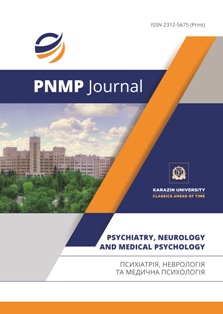
Psychiatry, Neurology and Medical Psychology
International Scientific and Practical Journal.
The journal is in the list of scientific specialized publications of Ukraine of category B: in the field of medical sciences (the order of the Ministry of Education and Science of Ukraine №409 from 17.03.2020): in the field of specialization 222 Medicine “Neurology”, “Psychiatry, Narcology”, 225 Medical Psychology; in the field of psychological sciences (the order of the Ministry of Education and Science of Ukraine №627 from 14.05.2020): in the field of specialization 053 Psychology «Medical Psychology».
The journal publishes problem articles, the results of original and experimental studies, review articles, discussion and historical nature, short reports, lectures, reviews, case studies, informational materials, work on teaching neuroscience, organization and management of the psychoneurological service and other materials, devoted to actual problems of clinical and forensic psychiatry, narcology, neurology, medical psychology, as well as psychotherapy, pharmacotherapy, etc. -
Psychological Counseling and Psychotherapy
Media identifier in the Register of the Field of Media Entities:
R30-04464 (Decision № 1538 dated May 9, 2024 of the National Council of Television and Radio Broadcasting of Ukraine, Protocol № 15)
Cluster of scientific professional publications:
Human Capital Development, Social Sciences, and Journalism.
Professional publication in the psychological sciences. The journal presents a variety of psychotherapeutic approaches, modalities, and techniques related to the psychological and medical space of modern psychotherapeutic and counseling assistance. Theoretical and practical issues related to various aspects of psychotherapeutic intervention for various disorders, their gender aspects, psychodiagnostic methods, the interaction of psychotherapy and culture, etc. are considered. For psychotherapists, consultants, practical psychologists, and anyone interested in providing psychotherapeutic assistance. The concept of the journal is to consider topical theoretical and practical problems of modern psychotherapy in its medical (clinical) and psychological dimensions, in organizing an interdisciplinary dialogue, in identifying resources for the growth of psychotherapy itself, in legitimation. psychotherapy and psychological counseling in a professional academic environment. The journal analyzes the problems of psychotherapy, psychological counseling, medical psychology, gender psychology and sexology.
UDC 159.9
The founder and publisher:
V.N. Karazin Kharkiv National University, 4 Svobody Sq., Kharkiv, 61022, Ukraine. Code according to EDRPOU: 02071205. Publisher's ROR: https://ror.org/03ftejk10. Year of foundation: 2014. The publication frequency is two issues per year.
Digital object identifier (DOI):
10.26565/2410-1249
Scientific Periodicals of the Karazin University: -
Проблеми сучасної освіти
Збірник присвячено загальним питанням сучасної освіти, інноваційним освітнім технологіям та методиці викладання у вищій школі, а також актуальним проблемам навчання студентів-іноземців в Україні. В окремому розділі представлено кращі випускні роботи слухачів школи педагогічної майстерності.
-
Social Economics
The scientific journal ‘Social Economics’ has been included in the List of Ukrainian Scientific Specialised Publications within the ‘Economic Transformation, Business and Administration’ cluster and has been assigned category ‘B’ (Order of the Ministry of Education and Science of Ukraine No. 928 of 11 June 2026).
The journal is dedicated to highlighting the results of research on issues of labor motivation, management at various economy levels , the credit and monetary system, accounting and auditing, international economics and the world economy, economics and mathematical methods and models, statistical analysis and marketing strategies.
Specialties (ISCED-F 2013):
- 0311 «Economics»,
- 0412 «Finance, banking and insurance»,
- 0413 «Management and administration»,
- 0414 «Marketing and advertising».
Articles written by researchers, lecturers, practitioners, postgraduates of economic specialties are accepted for publication.
-
Theory and Practice of Public Administration
Theory and Practice of Public Administration : Collection of Scientific Works. – Kharkiv : V. N. Karazin Kharkiv National University.
The scientific publication papers «Theory and Practice of Public Administration», grouped together under five headings, are devoted to the problem issues of public administration system development, state regulation of economic and social development processes, directions of reforming the local selfgovernment system in Ukraine, foreign policy and national security issues.
For scientists, researchers, public servants, local officials, and for everyone interested in modern problems of public administration.UDC 35
Founded in 2003
Founder: V.N. Karazin Kharkiv National University
Published semiannually – in June and December -

Antiquities (Drevnosti). Kharkiv Historical & Archaeological Annual
Specialized scientific publication
“Antiquities” is an academic journal that contains articles of theoretical and scientific nature in the field of archeology, ancient and medieval history, as well as related disciplines and regional studies. The journal is published annually since 1994 by the Faculty of History of the V. N. Karazin Kharkov National University and the Kharkov Historical & Archaeological Society.
The prime aim of "Antiquities" is informing an academic community about new results and discoveries in the field of ancient and medieval history, which are interesting for an international audience.
-
East European Journal of Physics
East European Journal of Physics is an open-access international peer-reviewed journal devoted to experimental and theoretical research on nuclear physics, cosmic rays and particles, high-energy physics, solid-state physics, plasma physics and controlled thermonuclear fusion, physics of charged particle beams, plasma electronics, radiation materials science, physics of thin films, condensed matter physics, functional materials and coatings, nanomaterials, physics of nanoparticles, molecular dynamics, technical thermal physics, and industrial power, medical physics and physical technologies in an interdisciplinary context.
EEJP registered by order of the Ministry of Education and Science of Ukraine No. 1643 of 28.12.2019 and included in the list of scientific professional Editions of Ukraine (category “A,” specialty: 104, 105), in which results of dissertations for obtaining Ph.D. and Dr. Sci. degrees in physical and mathematical sciences can be published.
Media identifier in the Register of the Field of Media Entities: R30-04470 (Decision № 1538 dated May 9, 2024, of the National Council of Television and Radio Broadcasting of Ukraine, Protocol № 15)
The Journal is a part of the Web of Science Core Collection (ESCI) scientometric platform.
-
Ukrainian Sociological Journal
The Ukrainian Sociological Journal is a professional edition in the sociological sciences.
The journal was founded in 2008.
Since 2009, the journal has been published by the Sociological Association of Ukraine and the Sociological Faculty of V. N. Karazin Kharkiv National University.
Since 25 March 2024, the Sociological Association of Ukraine has become the sole owner of the Ukrainian Sociological Journal.
The journal is the official scientific and informational edition of the Sociological Association of Ukraine.
The Ukrainian Sociological Journal publishes the original research articles in all fields of sociology, based on profound theoretical and empirical studies of contemporary Ukrainian society, made by the flagship Ukrainian and foreign scientists.
A special attention is given to presentation of young researchers' findings and the scientific life of the regional branches of the Sociological Association of Ukraine.
Publication frequency - twice a year.
The Ukrainian Sociological Journal is a specialized edition in sociology (Order of the Ministry of education and science of Ukraine from 02.07.2020, No. 886).
Media identifier in the Register of the field of Media Entities: R30-04986 (Decision № 2323 dated July 11, 2024 of the National Council of Television and Radio Broadcasting of Ukraine, Protocol № 20). The Sociological Association of Ukraine, Kharkiv, was registered as a print media entity.
-
Journal of Surface Physics and Engineering
«Journal of Surface Physics and Engineering» highlights the achievements and problems of plasma, radiation, laser and complex physical technologies as well as research of thin film formation and surface modification, physical properties of resulting structures, economic issues and education in the field of high technologies.
DOI: 10.26565/2519-2485
-
FINANCIAL AND CREDIT SYSTEMS: PROSPECTS FOR DEVELOPMENT
Collection of Scientific works «Financial and credit systems: prospects for development» is publishing on the base of Educational and Scientific Institute «Karazin Banking Institute» of the V.N. Karazin Kharkiv National University. The Collection covers key issues of economics, accounting, finance and banking, management and information technologies in mentioned directions.
Сertificate of state registration: КВ №24781-14720Р
ISSN : 2786-5002 (online)
ISSN : 2786-4995 (print)
Publication languages: Ukrainian and English.
Frequency of publication – 4 issues per year.
Collection Subject Areas:
- Banks of the present and the future.
- Finance, accounting, audit and taxation.
- Economic and mathematical methods and models of financial development.
- Modern macroeconomic trends and tendencies.
- Management of financial and credit systems and the socio-humanitarian component of their development.
-
Photobiology and Photomedicine
Specialized publication on medical, biological and technical sciences.
The journal publishes articles on clinical and experimental photomedicine, photobiology, and their physical and technical foundations.
-
Харківський історіографічний збірник
Фахове видання з історичних наук.
Збірник містить статті з актуальних проблем історії і теорії історичної науки та освіти. Раз на два роки в «Харківський історіографічний збірник» входять блоки, які формуються з матеріалів «Астаховських читань» та мають тематичну спрямованість.
-
Human Geography Journal
Focus and Scope: The «Human Geography Journal» publishes articles containing the results of theoretical, methodological and applied nature, reflecting the results of socio-geographical research by leading scientists, teachers, and graduate students from Ukraine and foreign countries.
Aims and objectives of the journal: Publication of research results on the development and distribution of the population, economy and social infrastructure in the regions of Ukraine and around the World.
Main sections of the journal: The journal has the following rubrics: «Science Skylines», «Research Reports», «Research of young Scientists», «Reviews», «Personalities», «Anniversaries». The articles of the leading researchers are accepted to the rubric «Science Skylines», which highlight issues of theory and methodology of the modern human-geographical researches, raise issues of new theoretical and methodological approaches in the science. Results of applied human-geographical researches based on materials of the regions of Ukraine and other states are published in the rubric «Research Reports». The rubric «Research of young Scientists» gives PhD students the opportunity to publish results of their researches. Reviews on monographs and other scientific publications having been published are placed in the rubric «Reviews». The rubric «Personalities» is devoted to outstanding scientists in the field of human geography. It highlights their life, career, and contribution to the development of geographical science. Congratulations with important dates of the leading human geographers are published in the rubric «Anniversaries».
Purpose: For teachers of higher educational institutions, scientists and experts in economic and social geography.
Media identifier in the Register of the field of Media Entities: R30-04480 (Decision № 1538 dated May 9, 2024 of the National Council of Television and Radio Broadcasting of Ukraine, Protocol № 15).
Journal is a Professional publication (category B) (MES Ukraine Order № 928 of 11/06/2026).
Scientific journal cluster: Human capital development, social sciences and journalism.
Speciality: C6. Geography and Regional Studies.
ISSN: 2076-1333
e-ISSN: 2312-1130
UDC 911.3
Year of foundation: 2005
Frequency:2 issuesper year.
DOI: 10.26565/2076-1333
Languages: Ukrainian, English.
Founder and Publisher: V.N. Karazin Kharkiv National University, 4 Svobody Square, Kharkiv, 61022, Ukraine.
EDRPOU code: 02071205
Publisher's ROR: https://ror.org/03ftejk10
Unique DOI prefix of the journal publisher: 10.26565
Scientific periodicals of Karazin University: https://karazin.ua/en/nauka/fakhovi-vidannia/
Contact information of the founder and publisher: publishing@karazin.uaOfficial Website of the Journal: https://periodicals.karazin.ua/socecongeo
-
SOCIOPROSTIR: the Interdisciplinary Online Collection of Scientific Works on Sociology and Social Work
Socioprostir is an interdisciplinary electronic collection of scientific papers in sociology and social work, aimed at creating a network of sociologists and social workers whose interests are focused on the study and solution of social problems of modern society.Its main goal is to promote interdisciplinary scientific and practical communication of sociologists and social workers in the study and search for ways to solve social problems.The scientific e-collection Socioprostir publishes articles that contain the results of scientific research in sociology and social work on the following topics: theory and methodology of research on social problems; results of research on social problems; social policy and social workMedia identifier in the Register of Media Entities: R40-06759 (Decision No. 2801 of 12/18/2025 of the National Council of Ukraine on Television and Radio Broadcasting. Protocol No. 28)Scientific journal cluster: Human Capital Development, Social Sciences, and Journalism
Specialties: C5 Sociology; I10 Social Work and Counseling
ISSN: ISSN 2218-2470 ISSN-L:2218-2470
UDC: 3 social sciences
Year of foundation: __2010__
Frequency: _1 issue per year.
(https://search.crossref.org/search/works?q=10.26565%2F2218-2470&from_ui=yes)
Founder and publisher:
V.N. Karazin Kharkiv National University,
4 Svobody Square, Kharkiv, 61022, Ukraine.
EDRPOU code: 02071205
Publisher's ROR: https://ror.org/03ftejk10
Unique DOI prefix of the journal publisher: 10.26565
Scientific periodicals of Karazin University:
https://karazin.ua/en/nauka/fakhovi-vidannia/
Contact information of the founder and publisher: publishing@karazin.ua
-
The Journal of V.N.Karazin Kharkiv National University. Series «Biology»
The Journal of V.N.Karazin Kharkiv National University. Series "Biology" is a collection of scientific works containing results of experimental research and reviews on biology, including biochemistry and genetics, zoology and botany, animal and plant physiology, mycology, microbiology, soil science, cryobiology, etc., as well as materials about events in scientific life and descriptions of original methods and devices in the field of biology.
The Journal is intended for teachers, scholars, students and post-graduate students, specializing in biology or adjacent fields of science.
The Journal has been registered by the order of Ministry of Education and Science of Ukraine No. 928 of 11.06.2026, and included in the list of scientific specialized editions of Ukraine (category “B”, specialties: E1 - Biology and Biochemistry, G21 - Biotechnology and Bioengineering, cluster - Biology, biotechnology, medicine and rehabilitation).
-
Visnyk of V. N. Karazin Kharkiv National University. Series Geology. Geography. Ecology
Specialized edition on geological and geographical sciences.
Indexed in: WorldCat, BASE (Bielefeld Academic Search Engine), ResearchBible, SBB (Staatsbibliothek zu Berlin), Ulrich's Periodicals Directory, EBSCO, Index Copernicus, Google Scholar, DOAJ, Web of Science (Emerging Sources Citation Index (ESCI), Scopus
Visnyk of V. N. Karazin Kharkiv National University, series “Geology. Geography. Ecology” is devoted to the modern studies in the field of geology, geochemistry, hydrogeology, ecology and social and economic geography.
“Visnyk” is intended for scientists, specialists and high school lecturers.
-
Visnyk of V. N. Karazin Kharkiv National University. Series Еcоlogy
Journal is a Professional publication (category B) within the cluster "Earth and Environmental Sciences" (specialties E2, E4)
Order of the Ministry of Education and Science of Ukraine dated June 11, 2026 No. 928
The journal Visnyk of V. N. Karazin Kharkiv National University. Series Еcоlogy highlights the results of scientific research in such areas as human ecology, medical and environmental research, biotechnology, constructive geography, ecology and balanced nature management. Considerable attention is paid to issues of environmental monitoring, environmental assessment, application of modern environmental protection technologies, as well as problems of organization and methodology of ecological, biological, geographical and nature protection education.
For scientists and specialists in the field of ecology, geography, biology, environment protection and rational use of nature.The journal is included in the List of scientific professional editions of Ukraine, in which the results of theses and dissertations for the scientific degrees of the Doctor and the Candidate in Geographical Sciences may be published.
-
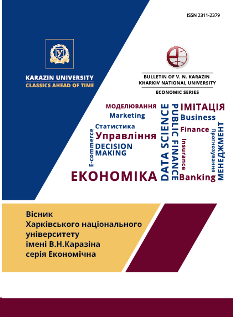
Bulletin of V. N. Karazin Kharkiv National University Economic Series
The Bulletin publishes articles that contain the results of theoretical and applied research in the field of economics, business, and management.
For scientific staff, lecturers, employees of business structures and public authorities, postgraduate students and students of economic and other specialties.
Scientific journal cluster Economic transformation, business and administration category "B" (Order of the Ministry of Education and Science of Ukraine No. 928, 11.06.2026).
Specialties:
- CI Economics and International Economic Relations (by specialization);
- D2 Finance, Banking, Insurance and Stock Market;
- D3 Management;
- D5 Marketing.
Media identifier in the Register of the field of Media Entities: R30-04450 (Decision № 1538 dated May 9, 2024 of the National Council of Television and Radio Broadcasting of Ukraine, Protocol № 15)
ISSN 2311-2379 (Print)
DOI (Digital Object Identifier) 10.26565/2311-2379 -
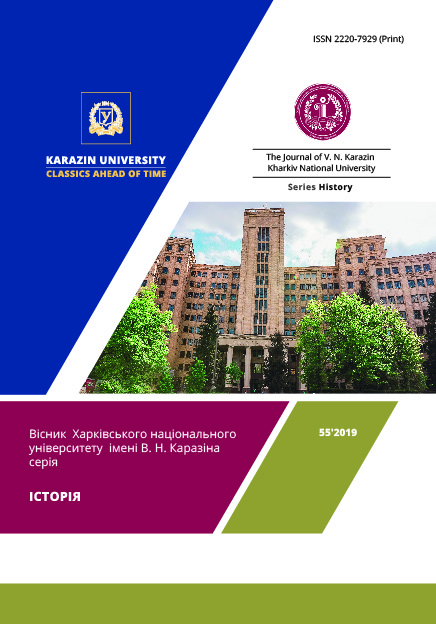
The Journal of V. N. Karazin Kharkiv National University. Series History
The Journal is devoted to current issues of the history of Ukraine, ancient and medieval history, archeology, modern and contemporary history, historiography and source studies. It will be interesting for scientists, experts, lecturers of higher educational institutions, postgraduate student, and students.
-
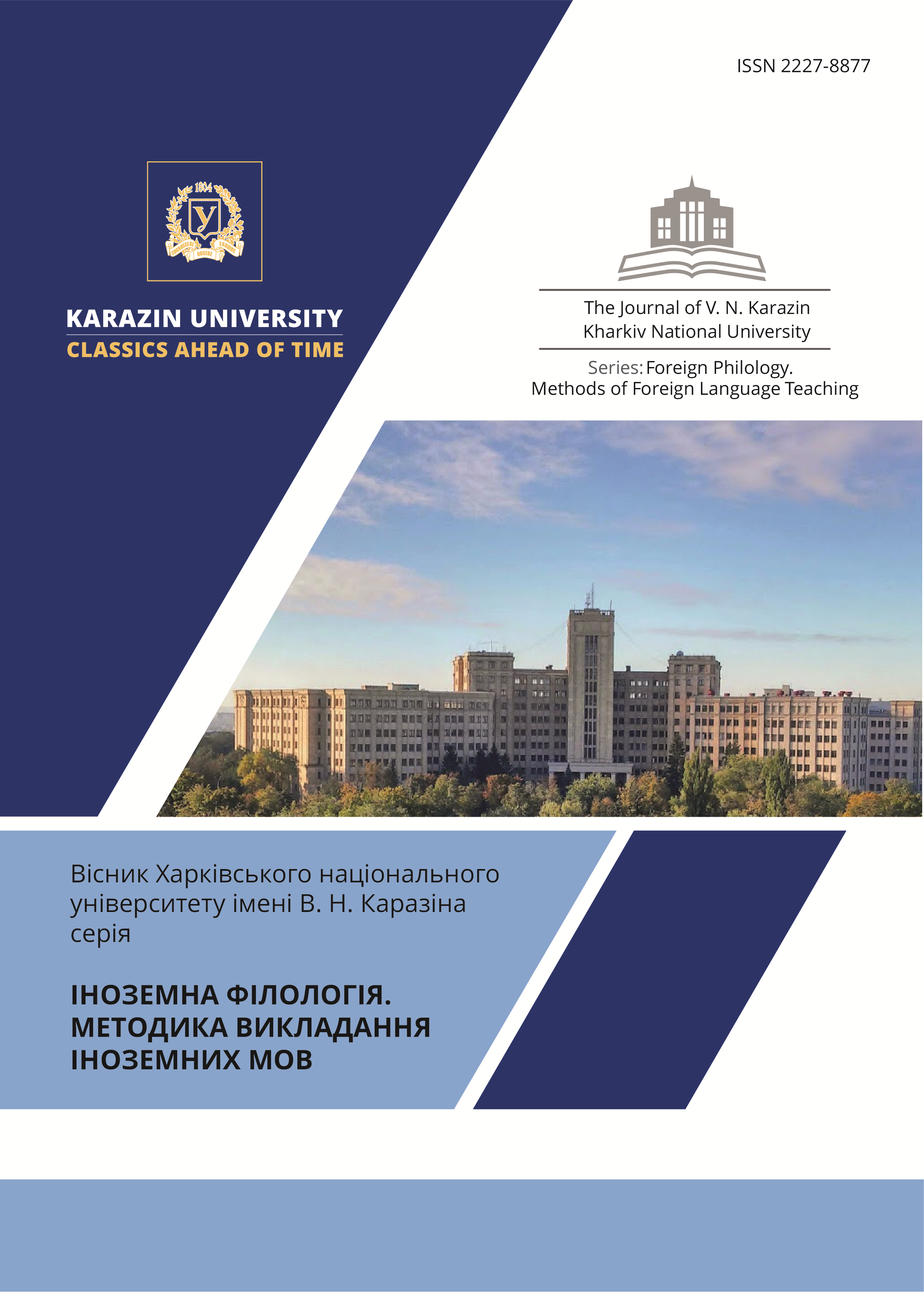
The Journal of V.N. Karazin Kharkiv National University. Series: Foreign Philology. Methods of Foreign Language Teaching
The Journal of V.N. Karazin Kharkiv National University. Series: Foreign Philology. Methods of Foreign Language Teaching is included in the list of professional scientific publications recommended for publication of the main scientific results of dissertations by the decision of the Ministry of Education and Science of Ukraine (07.10.2016, № 1222).
Frequency – 2 issues a year.
-
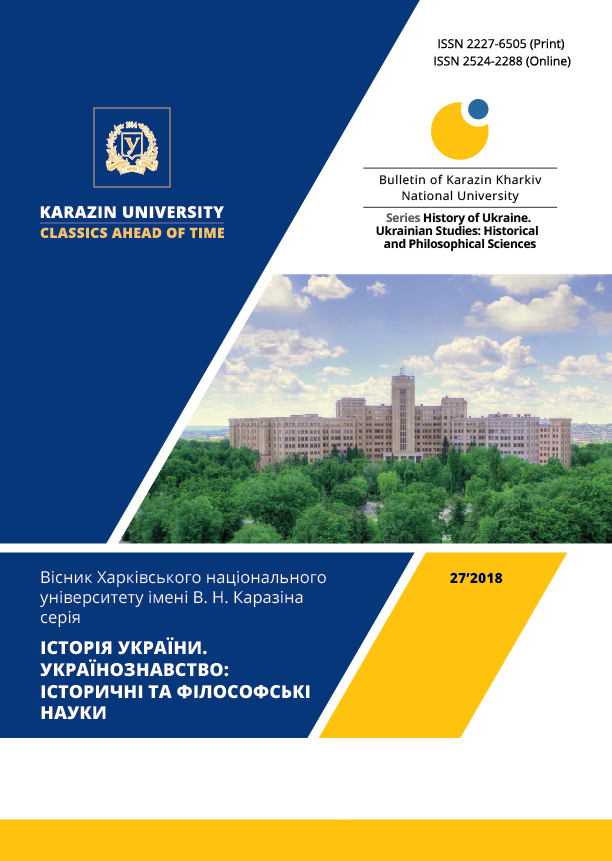
V. N. Karazin Kharkiv National University Bulletin History of Ukraine. Ukrainian Studies: Historical and Philosophical Sciences
Фахове видання з історичних наук.
Досліджується історія та культура України, історіографічні проблеми, етнокультурні студії, розглядаються особливості соціальних, політичних і культурних процесів у європейському, загальноукраїнському та регіональному вимірах від давніх часів до сьогодення.
-
Visnyk of V. N. Karazin Kharkiv National University. Ser. Mathematics, Applied Mathematics and Mechanics
Indexed/Abstracted in Zentralblatt MATH ( since 1999; indexed more than 400 documents).
Zentralblatt MATH (zbMATH) is the world’s most comprehensive and longest-running abstracting and reviewing service in pure and applied mathematics.The journal is included in the List of Scientific Professional Publications of Ukraine (category "B", order of the Ministry of Education and Science of Ukraine dated June 11, 2026 No. 928).
-
Bulletin of V.N. Karazin Kharkiv National University, series «Mathematical modeling. Information technology. Automated control systems»
A Ukrainian scientific journal in Category “B” of the “Information Technology and Electronics” publishing cluster, covering the fields F—Information Technology and G—Engineering, Manufacturing, and Construction, with the following specializations: F2—Software Engineering, F3 – Computer Science, F4 – Systems Analysis and Data Science, F5 – Cybersecurity and Information Protection, F6 – Information Systems and Technologies, F7 – Computer Engineering, G7 – Automation, Computer-Integrated Technologies, and Robotics (Order of the Ministry of Education and Science of Ukraine No. 928 dated June 11, 2026)
The articles present the results of current theoretical and practical research in the fields of computer science, artificial intelligence, mathematical modeling, cybersecurity, software engineering, computer engineering, systems analysis, automation, and robotics.
The journal is designed for teachers, researchers, graduate students and students working in correspondent or related fields.
-
The Journal of V. N. Karazin Kharkiv National University. Series: International Relations. Economics. Country Studies. Tourism
Economics Journal
The journal deals with current problems of international economic relations, economics, tourism. The topics covered are: theoretical bases of the world economy study, national models of social and economic development, international integration processes, competitive strategies. The problems of the theory and practice of tourism are shown.
For scientists, lecturers, postgraduates and students.
Journal of VN Karazin Kharkiv National University Series: "International Relations. Economics. Country Studies. Tourism" (IRECST) registered by the order of Ministry of Education and Science of Ukraine № 928 of June 11, 2026, and included in the list of scientific specialized editions of Ukraine (category “В”, specialty: C1).
Media identifier in the Register of the field of Media Entities: R30-04457 (Decision № 1538 dated May 9, 2024 of the National Council of Television and Radio Broadcasting of Ukraine, Protocol № 15)
-
The Journal of V. N. Karazin Kharkiv National University, series "Medicine"
Journal contains the following sections: Healthcare Organization; Fundamental Research; Clinical researches; Reviews; Clinical Practice; Lectures; Medical Law; Ecology and Health.
The Journal of V. N. Karazin Kharkiv National University, series "Medicine" Teaching is included in the list of professional scientific publications recommended for publication of the main scientific results of dissertations by the decision of the Ministry of Education and Science of Ukraine (№ 886 от 02.07.2020).
-
The Journal of V.N. Karazin Kharkiv National University. Series "Issues of Political Science"
"Issues of Political Science" considers the actual problems of the theory and practice of political processes in a globalized world. For professors, researchers and anyone interested in the issues of political science.
Media identifier in the Register of the field of Media Entities: R30-04458 (Decision № 1538 dated May 9, 2024 of the National Council of Television and Radio Broadcasting of Ukraine, Protocol № 15).
-
The Journal of V. N. Karazin Kharkiv National University. Series Law
A wide range of topical political and legal issues is highlighted, including: the problems of the formation and development of civil society and the rule of law in Ukraine; problems of ensuring human rights; problems of fighting crime and protecting public order; problems of improving national legislation and law enforcement practice.
The Journal is a specialized publication in the field of legal sciences, Ministry of Education and Science of Ukraine from 17.03.2020 y. № 409 (Annex 1) are included in the category "B" list of scientific professional publications of Ukraine in the field of Jurisprudence: 081 «Law», 262 «Law enforcement» and 293 «International Law».
For lawyers, politicians, academics and practitioners, students and postgraduates, as well as anyone interested in legal theory and law practice.
-
Visnyk of V.N. Karazin Kharkiv National University. Series Psychology
JOURNAL PURPOSE:
The purpose of the publication is to popularize and highlight modern psychological research, opportunities and ways to implement them in practice. The peer-reviewed journal publishes articles written on the basis of empirical and theoretical research conducted by the authors. The problems of personality, cognitive sphere, issues of ecological, pedagogical, political, social, medical psychology, features of behavior that does not correspond to the norm are considered. The journal is published with the aim of high-quality communication of scientists, development of domestic scientific potential and its integration into the world scientific space.
Media identifier in the Register of the Field of Media Entities: R30-04465 (Decision № 1538 dated May 9, 2024 of the National Council of Television and Radio Broadcasting of Ukraine, Protocol № 15)
-

Visnyk of V.N. Karazin Kharkiv National University, series “Radio Physics and Electronics”
У збірниках публікуються оригінальні наукові статті, що стосуються результатів експериментів та результатів теоретичних або модельних досліджень. Збірники охоплюють поширення радіохвиль у навколоземному середовищі, радіодіагностику середовища, поширення та дифракцію хвиль у складних електродинамічних структурах, зв'язок між лазерним випромінюванням та живими та неживими організмами, основи фізики напівпровідникових приладів тощо.
Для дослідників, аспірантів та студентів старших курсів радіофізики.
-
Visnyk of V. N. Karazin Kharkiv National University. Series Sociological studies of contemporary society: methodology, theory, methods
Visnyk of V. N. Karazin Kharkiv National University. Series "Sociological studies of contemporary society: methodology, theory, methods" was founded by department of Sociology of the Kharkiv National University in 1983, during the period of rapid development of sociology at the University of Kharkiv and in Ukraine in general.
For all forty years of its existence, the founder of the publication has been V. N. Karazin Kharkiv National University.Publication frequency - twice a year.
A panoramic view of Ukrainian society and global contexts through the prism of theoretical and empirical research of the modern world; publications of well-known Ukrainian and foreign scholars, as well as young scientists; current problems and prospects of development of national and world sociology in the context of social uncertainties; analysis of trends and phenomena of development of Ukrainian education and youth - all this is offered to the readers of the Bulletin.
Visnyk of V. N. Karazin Kharkiv National University. Series "Sociological studies of contemporary society: methodology, theory, methods" is included in the list of scientific professional publications of Ukraine (speciality - 054 Sociology) with the assignment of category ‘B’ (according to the Order of the Ministry of Education and Science №409 of 17.03.2020).Media identifier in the Register of the field of Media Entities: R30-04469 (Decision № 1538 dated May 9, 2024 of the National Council of Television and Radio Broadcasting of Ukraine, Protocol № 15).
The permanent sections of the publication are:
- Theoretical and methodological problems of sociology;
- Empirical studies of modern society;
- Research on education and youth issues;
- Sociological life: publications, events, visions.m 17.03.2020, No. 409) -
The Journal of V.N. Karazin Kharkiv National University. Series: Social Communications
Фахове видання з соціальних комунікацій.
У віснику розглядаються актуальні проблеми соціальних комунікацій на широкому матеріалі українського та зарубіжного інформаційних просторів.
Для науковців, студентів і всіх, хто цікавиться проблемами соціально-комунікаційних процесів.
-
The Journal of V. N. Karazin Kharkiv National University. Series "Theory of Culture and Philosophy of Science"
The given scientific articles are dedicated to actual problems of modern philosophy and
methodology of culture, ethics, aesthetics, Ukrainian and foreign culture.
Visnyk is authorized in the field of philosophic science (certificate of the Ministry
Education and Science of Ukraine №1328 from 21.12.2015.) -
Journal of V. N. Karazin Kharkiv National University. Series Physics
Specialty edition in physical and mathematical sciences.
The journal publishes articles and short messages containing original results of theoretical and experimental researches, as well as analytical reviews of literary sources on various topical issues of physics on topics of publication.
The following sections are tadicy: theoretical physics, solid state physics, low temperature physics, physics of magnetic phenomena, optics and spectroscopy, general questions of physics (mathematical methods, teaching methods: physical experiment and others).
The journal will be useful for physics teachers, researchers, graduate students, students.
-
Teaching Languages at Higher Educational Establishments at the Present Stage. Intersubject Relations
Фахове видання з педагогічних наук.
Розглядаються теоретичні та методичні питання викладання мов у вищих навчальних закладах, принципи створення підручників і навчальних посібників, викладання аспектів мови та місце культурології у процесі навчання іноземних мов, міжпредметні зв’язки.
Для науково-методичних працівників, методистів, викладачів, мaгіcтрантів та докторантів.
-
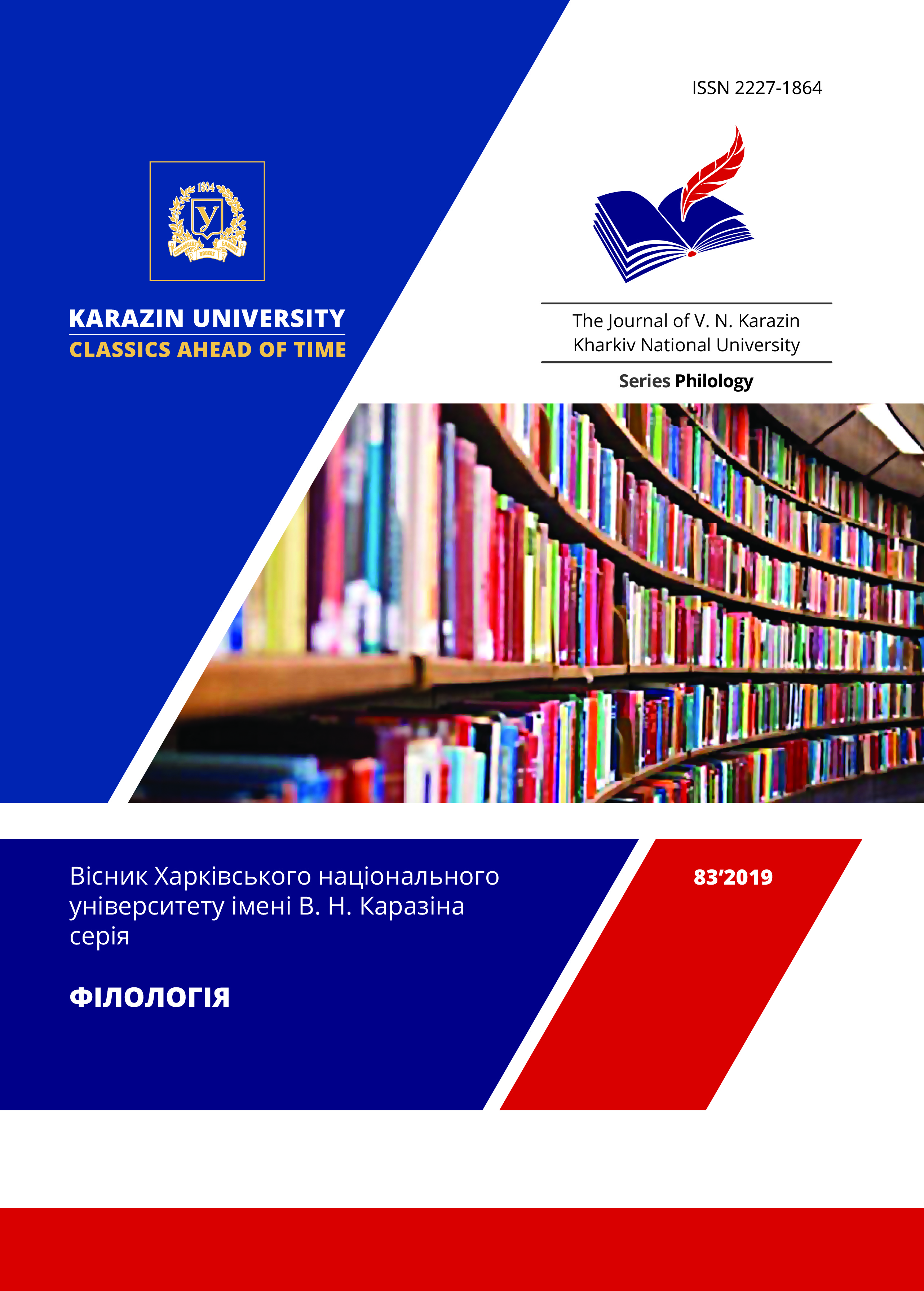
The Journal of V. N. Karazin Kharkiv National University. Series “Philology”
The Journal of V. N. Karazin Kharkiv National University, series “Philology” is a professional publication in the field of philological sciences (Specialty В11 «Philology»), category B (Order of the Ministry of Education and Science of Ukraine № 928 from 11.06.2026).
The Journal contains original articles about topical issues of modern linguistics and literary studies.
The journal is meant for scientists, postgraduate and doctoral students, students of philology and for everyone who is interested in philology problems.
-

The Journal of V. N. Karazin Kharkiv National University, Series Philosophy. Philosophical Peripeteias
UDC 1
Specialized edition for Philosophy, founded in 1965 by V. N. Karazin Kharkiv National University.
The collection contains articles on a wide range of philosophical problems, particularly the history of philosophy, social philosophy, philosophical anthropology, philosophy of law, ethics, ontology, logic, hermeneutics, religious studies, philosophy of education, cultural studies, etc.
Preference is given to original articles, which put forward new ideas, and summarized the experience in formulating and solving advanced problems in Ukrainian and foreign studies. We publish materials that are critical reviews of the achievements of philosophy and a review of scientific and methodological publications in the field of philosophical discipline. This collection is recommended for teachers of philosophy and cultural disciplines, researchers, graduate students, students, and anyone interested in the philosophical problems of our time.
By Decree No 409 of 17 March 2020 issued by the Ministry of Education and Science of Ukraine the status of specialized edition on philosophical sciences was given (Rank B).
Media identifier in the Register of the Field of Media Entities: R30-04476 (Decision No 1538 dated May 9, 2024, of the National Council of Television and Radio Broadcasting of Ukraine, Protocol No 15).
-

V. N. Karazin Kharkiv National University Bulletin. Chemical series
UDK 54
Professional publication in chemical sciences, category "B"
Cluster: Chemistry, Chemical Engineering, Pharmacy. Speciality : Chemistry
Founder: V. N. Karazin Kharkiv National University. Year of foundation: 1935
Diamond open access
Publishes papers devoted to various aspects of theoretical chemistry, chemical analysis, organic chemistry, inorganic chemistry, physical chemistry of solutions and surface phenomena, electrochemistry, materials chemistry. The bulletin is included into the List of scientific professional publications of Ukraine and officially authorized to publish results of research submitted for PhD and ScD degrees. (Order of the Ministry of Education and Science of Ukraine No. 928 of June 11, 2026)
Media identifier in the Register of the field of Media Entities: R30-04479 (Decision № 1538 dated May 9, 2024 of the National Council of Television and Radio Broadcasting of Ukraine, Protocol № 15)
2 issues per year
